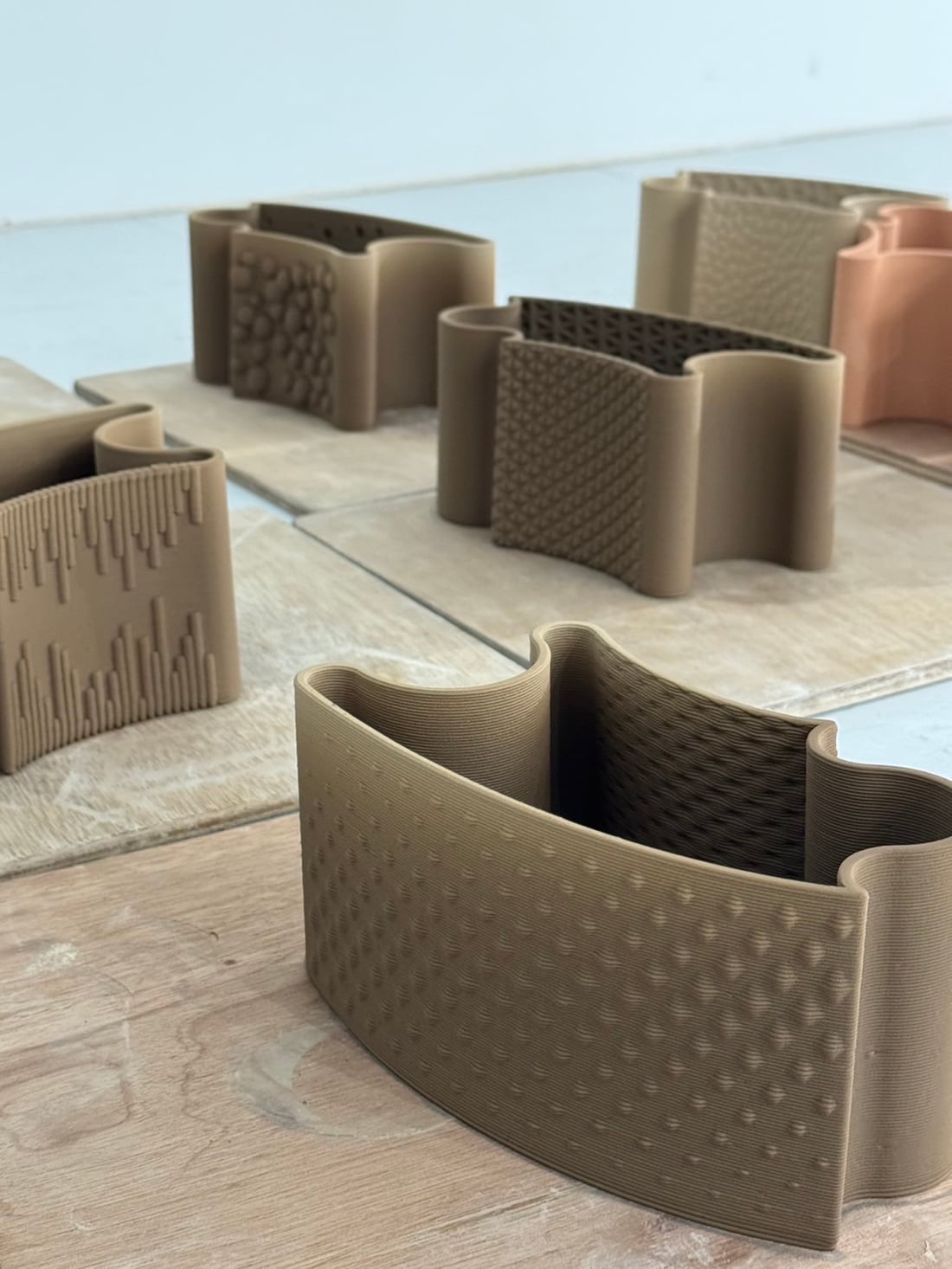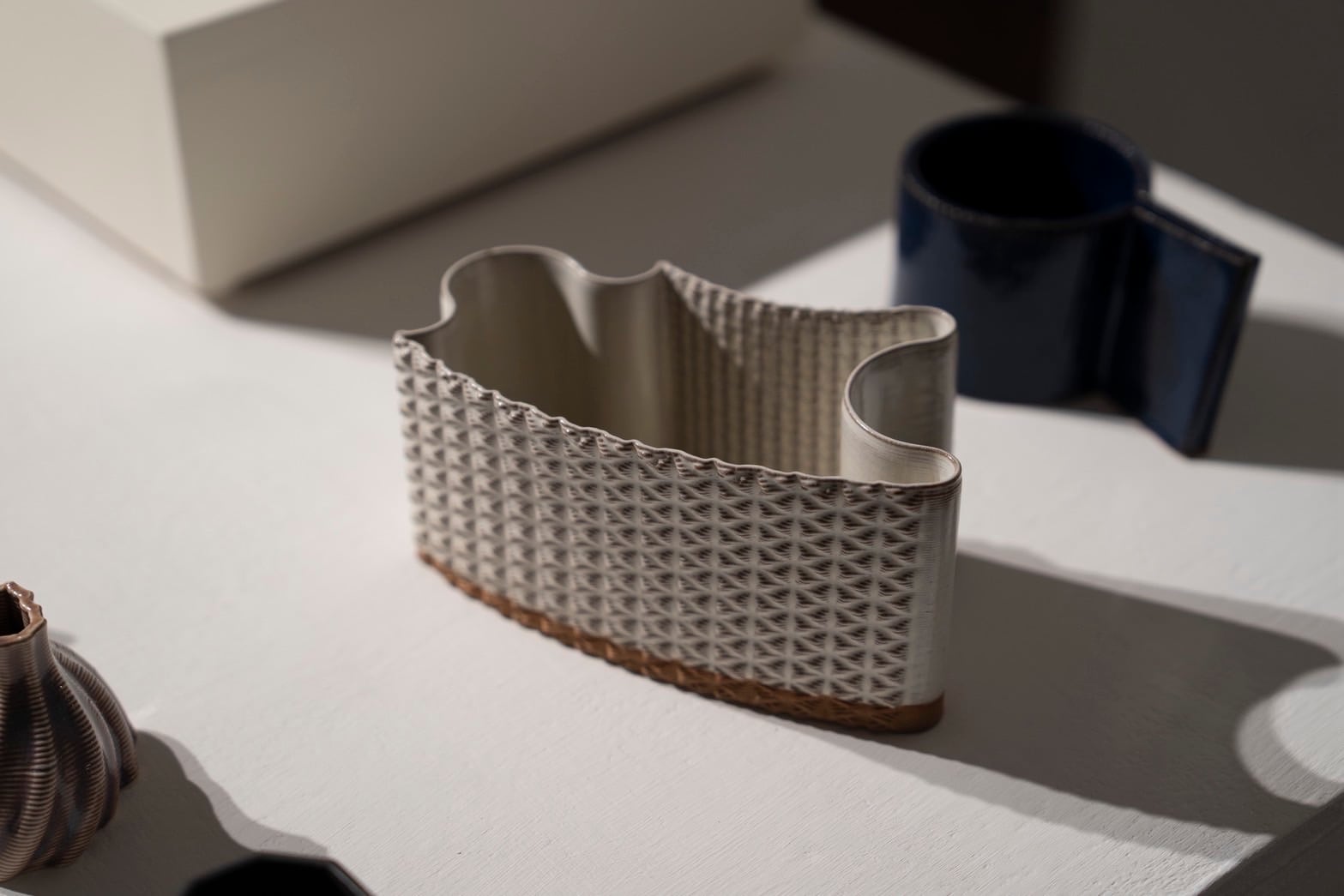
This project uses parametric design to give vases distinctive surface textures and formal variations, emphasizing how individual modules combine and assemble. Ceramic 3D printing realizes the complex geometry, and traditional glazing completes it — exploring the visual dialogue between digital logic and the tactile quality of the material.
- Parametric design generates the vases’ surface textures and formal variations, and every module can be combined with the others
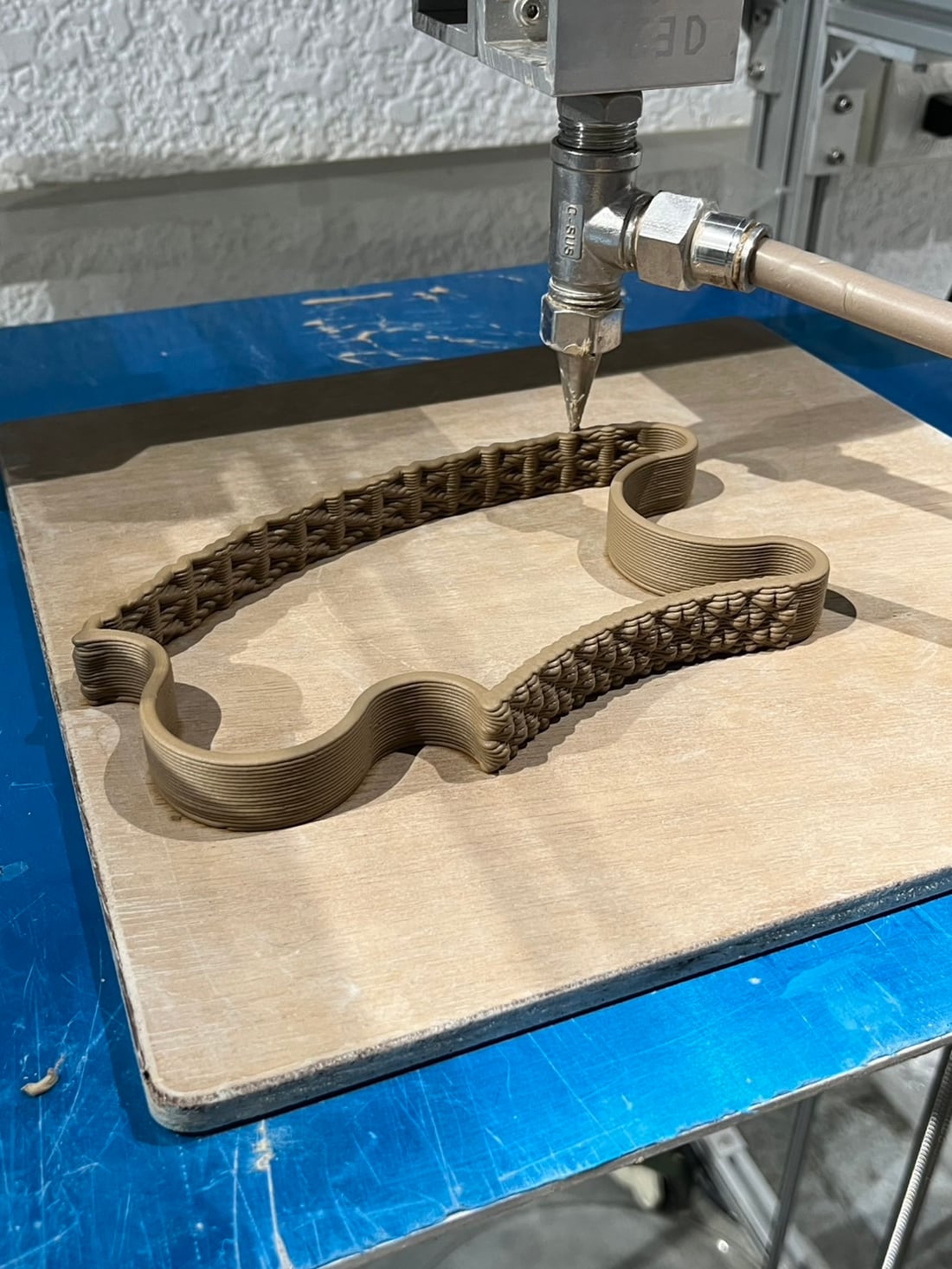
- Ceramic 3D printing makes complex geometry possible that traditional forming methods can’t achieve
- After forming, traditional glazing techniques bring the digital textures and the ceramic’s tactile quality together
PROCESS
From parametric texture to finished ceramics
The same base form paired with different parametric textures produces a series of modular vases that fit together; during printing, the clay extruder builds up the curved surfaces and textures layer by layer.