LLM × Parametric Design
Master’s thesis|Large language models for generative exploration in parametric design
A study of how large language models can step into parametric furniture design and help people without a design background get past the barrier of professional tools.
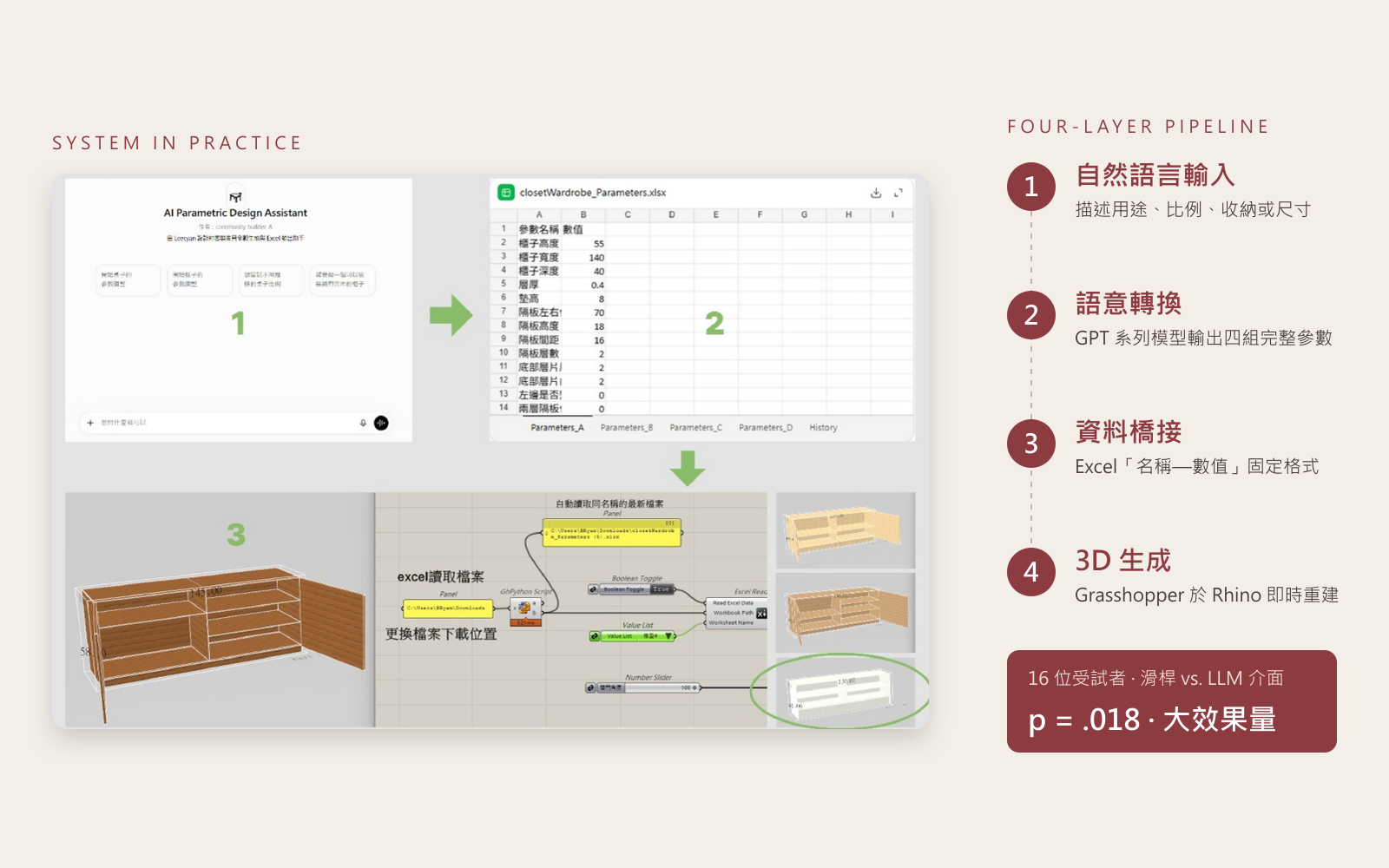
- Using a table (13 parameters) and a cabinet (15 parameters) as cases, built a four-layer prototype — natural-language input → semantic parameter translation → parametric model update — connecting GPT models, an Excel data bridge and Grasshopper
- Designed “parameter semantic guidelines” that define parameter ranges, semantic mappings, dependency and conditional rules, and safety limits, refined repeatedly based on failures in pilot tests
- A within-subjects study with 16 participants (8 with and 8 without a design background) compared traditional sliders with an LLM-assisted language interface, using non-parametric statistics and thematic analysis
- Overall differences between the two interfaces were not significant, but the relative gain of the LLM interface split by background (p = .018, large effect): non-designers rated it significantly higher in intuitiveness, satisfaction and motivation to explore
- Proposed a hybrid “rough-tune → fine-tune” interaction flow: the LLM suits early divergent exploration, sliders suit later refinement; accepted for an oral presentation at 4DFF 2026
Lots of parameters, but users speak everyday language
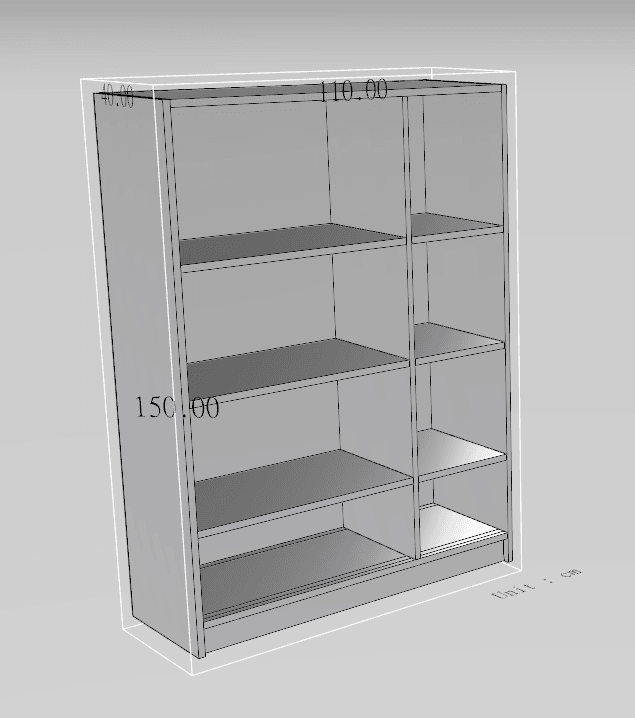
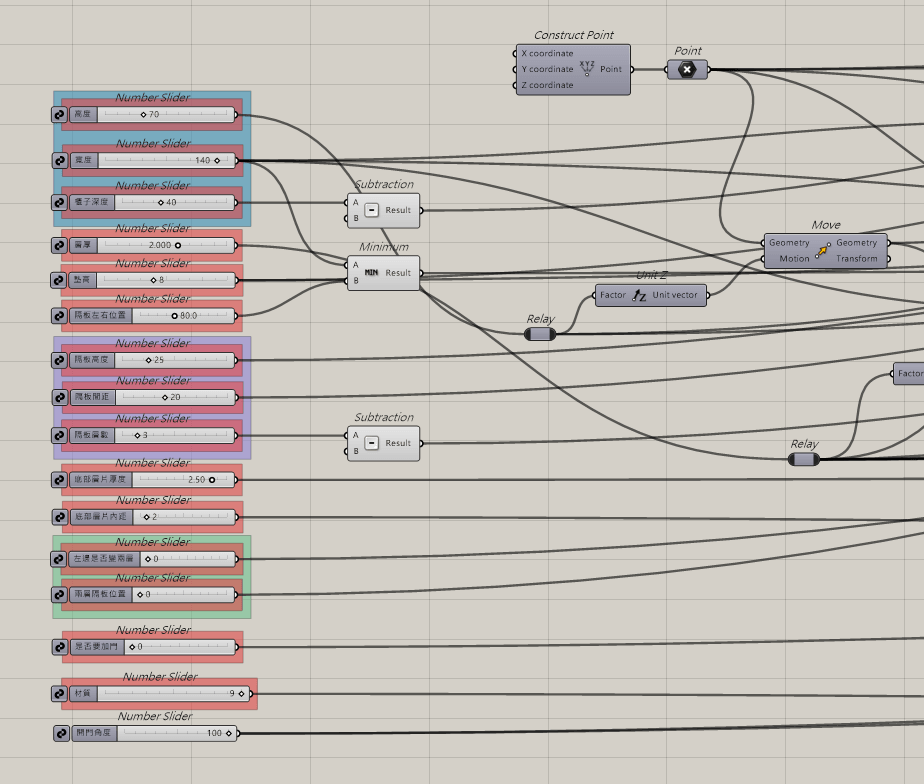
A parametric model can quickly change a cabinet’s height, depth, shelf positions and compartment ratios, but a single cabinet has more than a dozen sliders whose names rarely show what they do, and together they produce thousands of combinations. Everyday users have to find the right size by trial and error, and designers spend a lot of time fine-tuning.
Users actually know what they want to store and what style they need — they just don’t know which parameter stands for those needs. This study puts a large language model between “design needs” and “parameter control” as a mediator.
The traditional way: one slider at a time
Below is a screen recording in Rhino + Grasshopper: adjusting the number of shelves, whether the left side splits into two tiers, whether to add doors, the door angle and the material, with the model updating live. Each slider has to be understood and tried repeatedly before its effect on the form becomes clear.
Language × parameters: a four-layer prototype
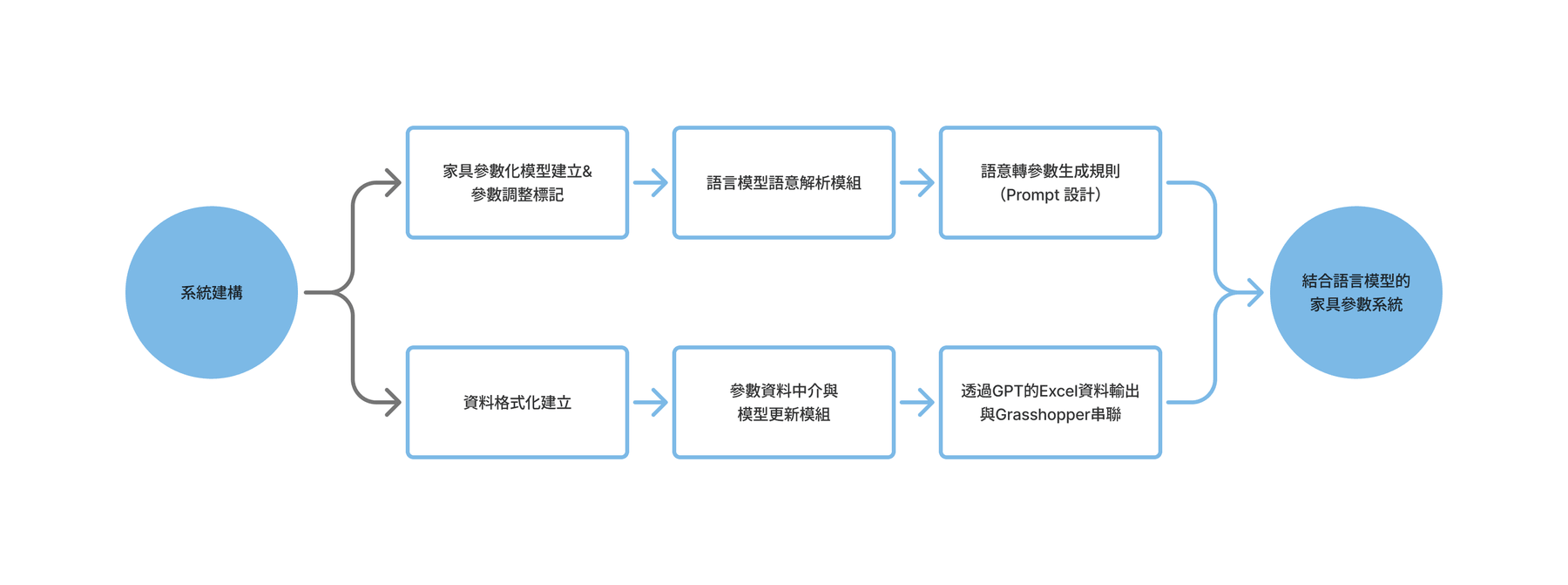
The system was built along two tracks. One builds the parametric furniture model and labels its parameters; a language model parses the meaning and turns it into parameters following prompt rules. The other defines a fixed data format: GPT outputs an Excel sheet, which Grasshopper reads to update the model.
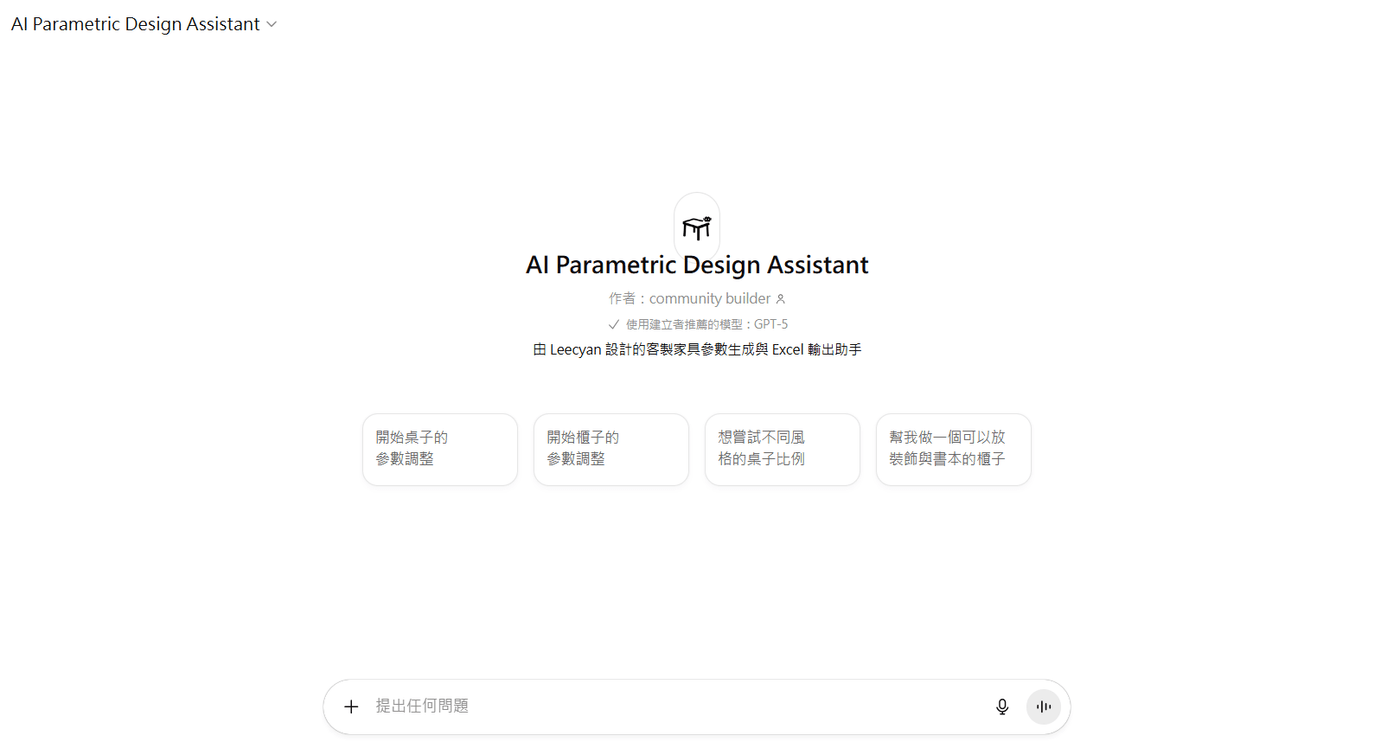
Users simply describe how they store things, what they will put in it or how they will use it, and the system generates a full parameter set and updates the 3D model. To reduce ambiguity, “parameter semantic guidelines” define parameter ranges, semantic mappings, dependencies and safety limits.
Custom cabinets: from one photo to a whole cabinet family
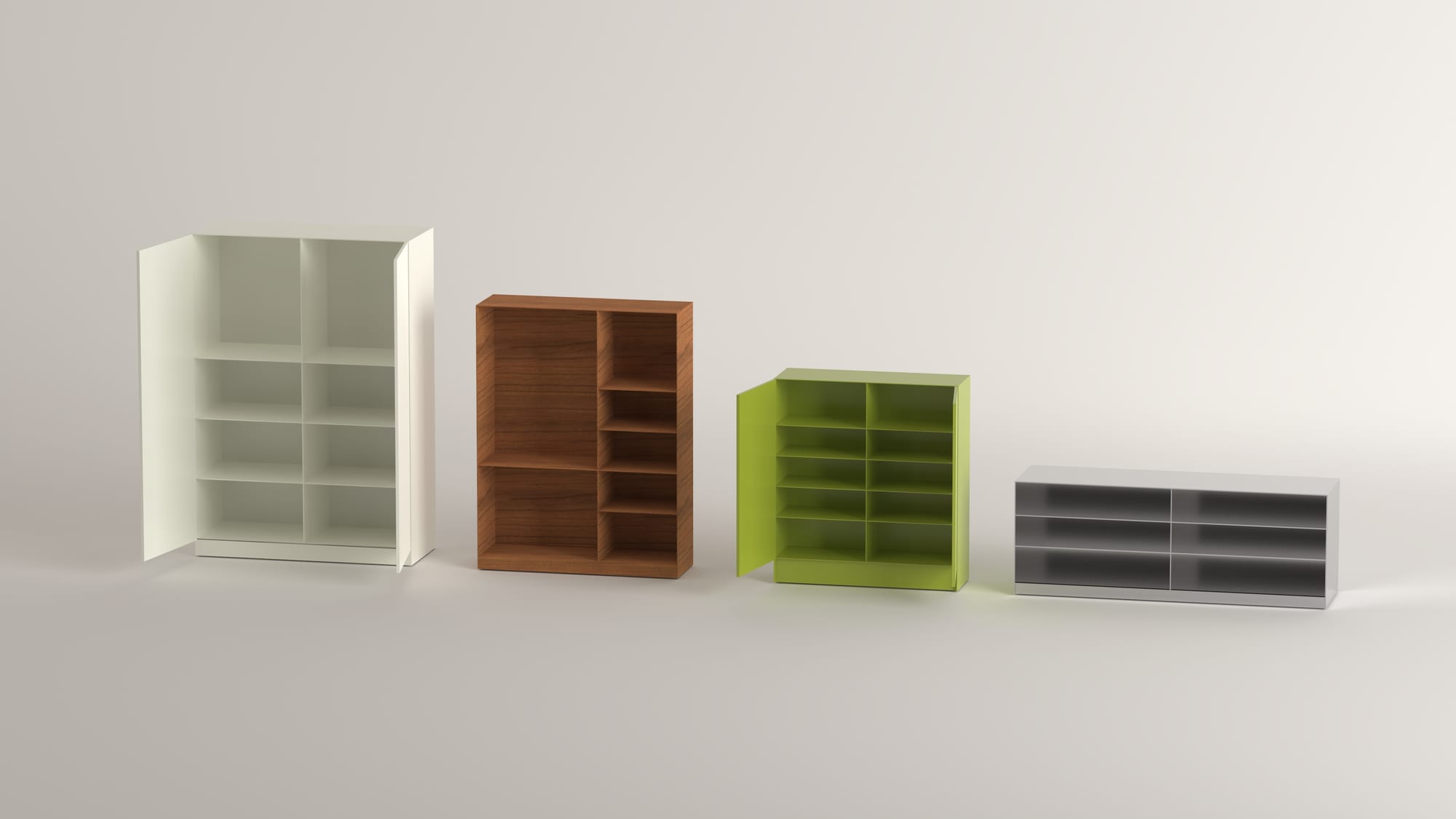
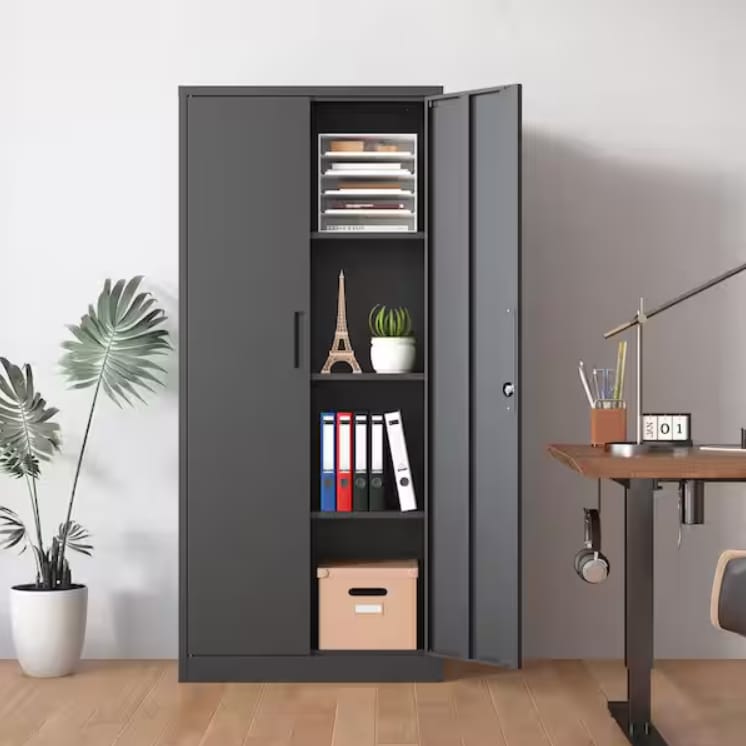
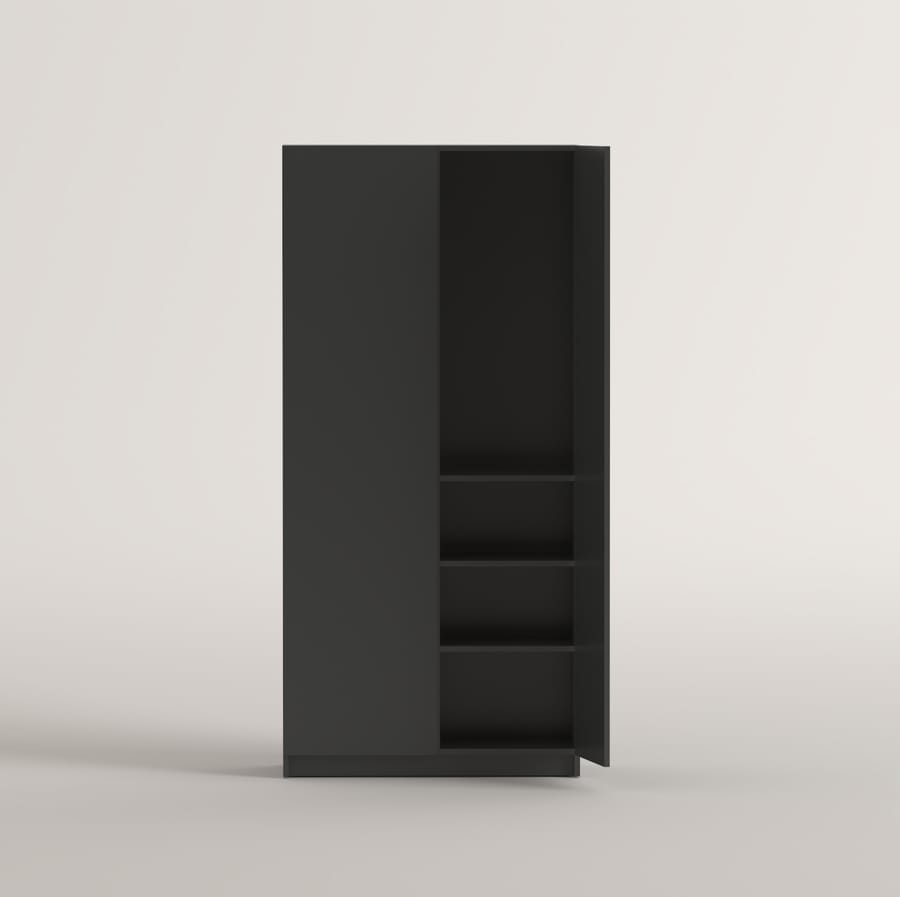
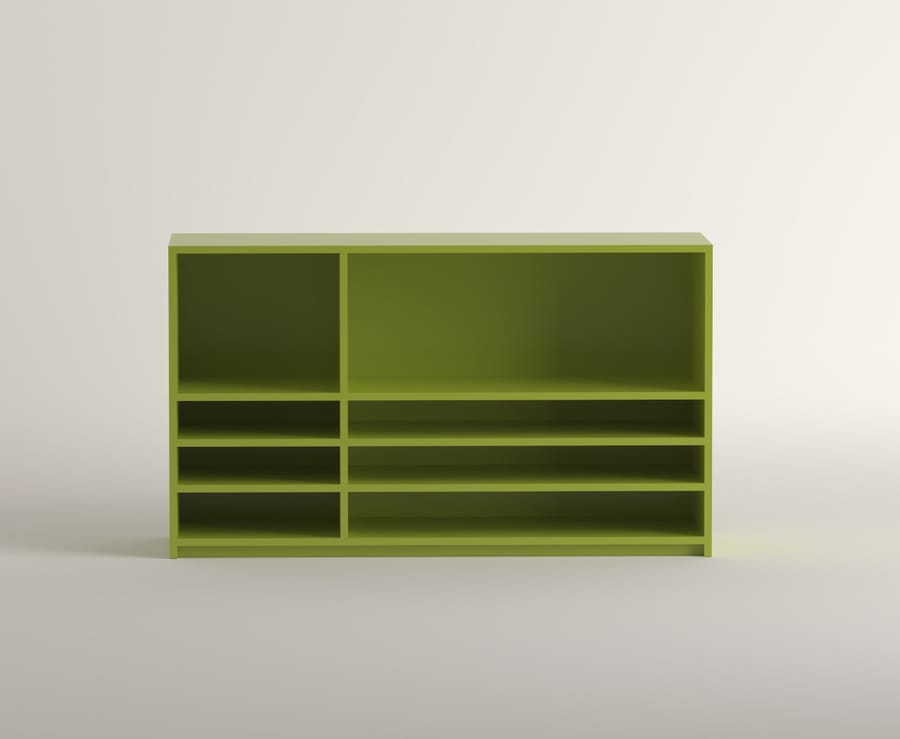
LLMs can read images too. Given a reference photo, the system identifies the cabinet’s color, proportions, door style and shelf layout, estimates each shelf height from objects of known size such as an A4 file box, and maps it to the parametric model to get a close 3D match.
Keep the proportions, derive new uses
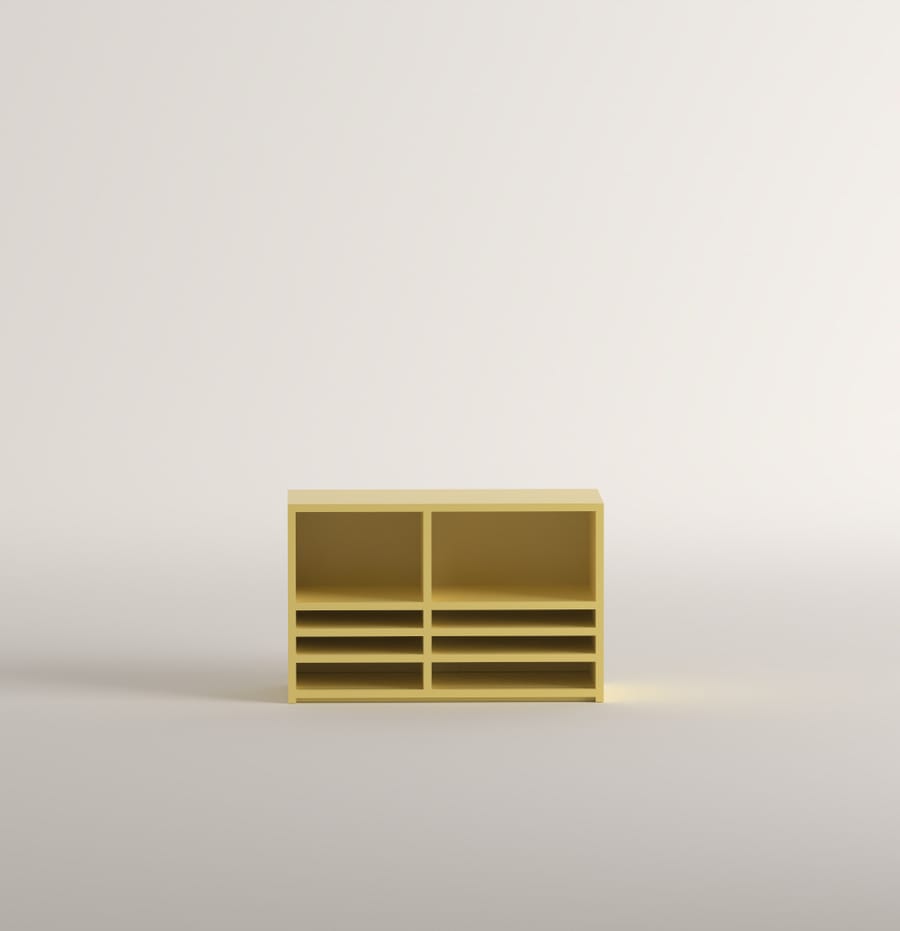
Next, the LLM keeps the shelf proportions while changing size and color, deriving three parameter sets — a low appliance cabinet, a room storage cabinet and a desktop bookshelf — each with a note on its use. Instead of working out dimensions from scratch, users choose among options in a consistent style.

Biomimetic phone cases: adjusting the texture itself through conversation
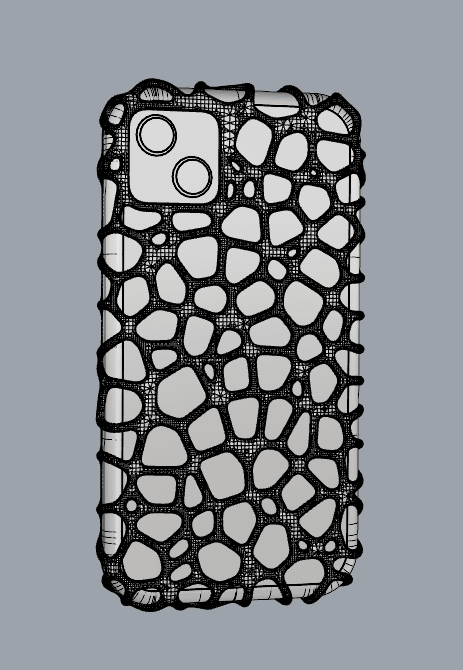
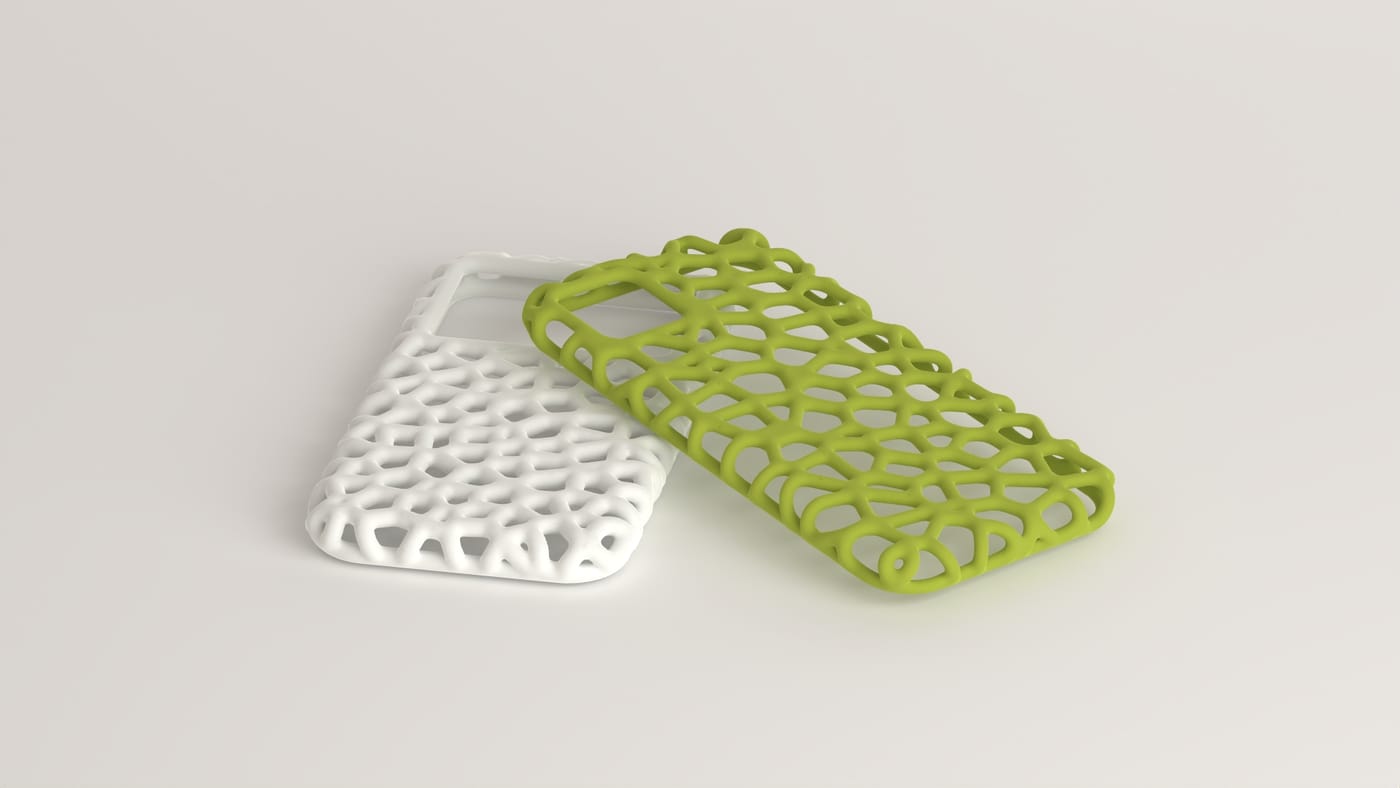
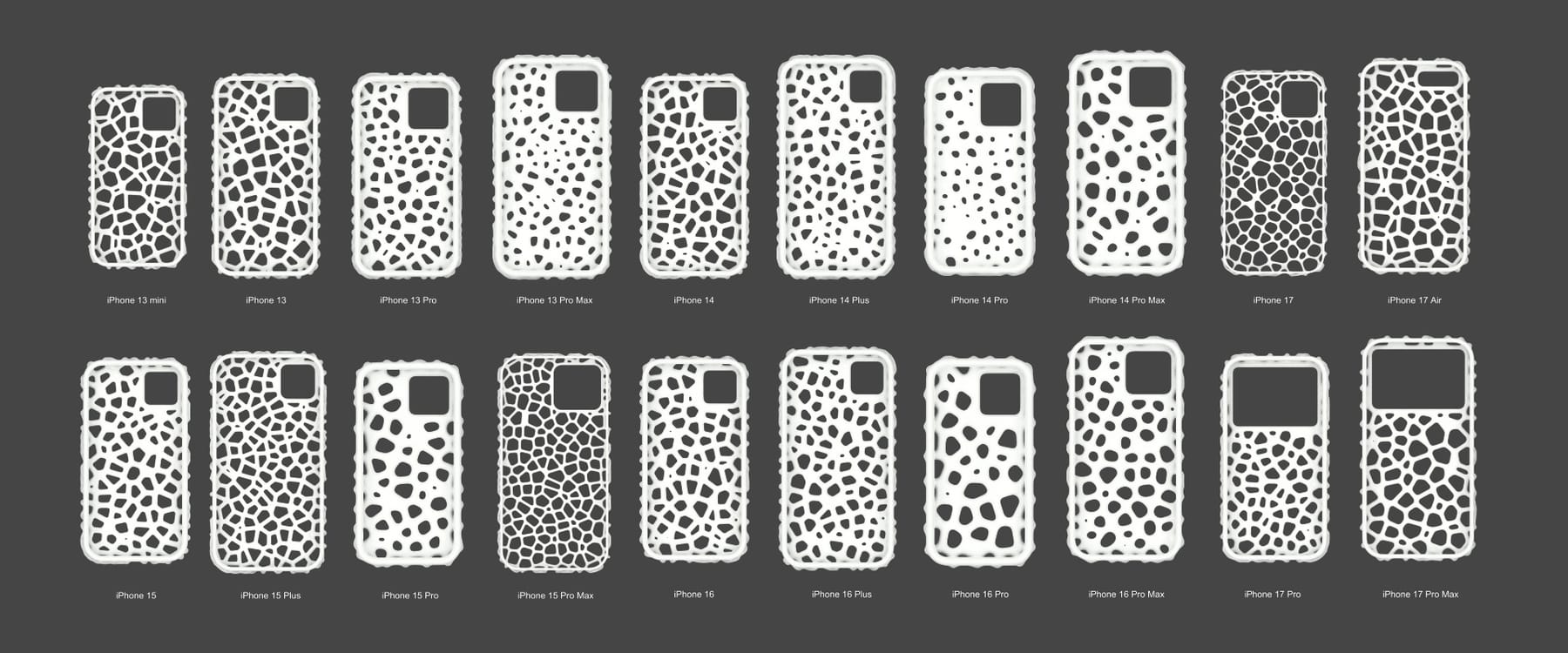
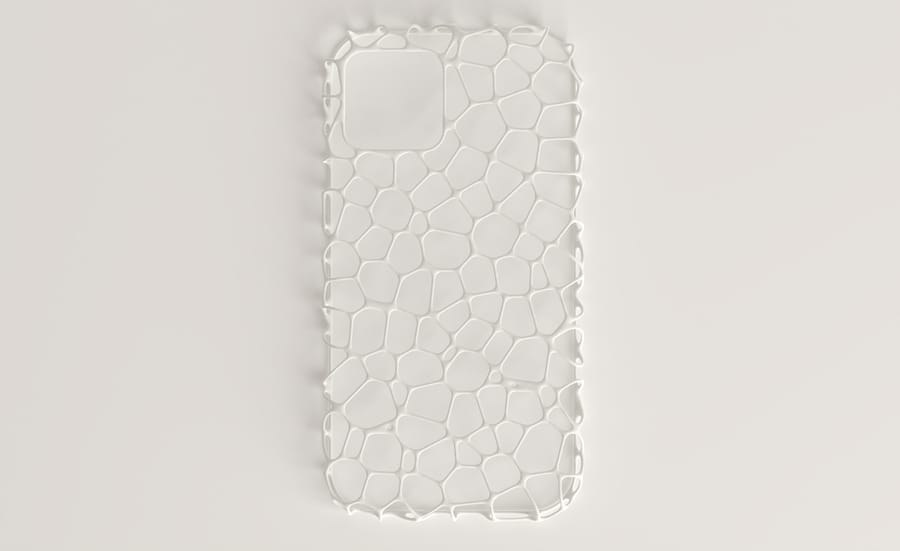
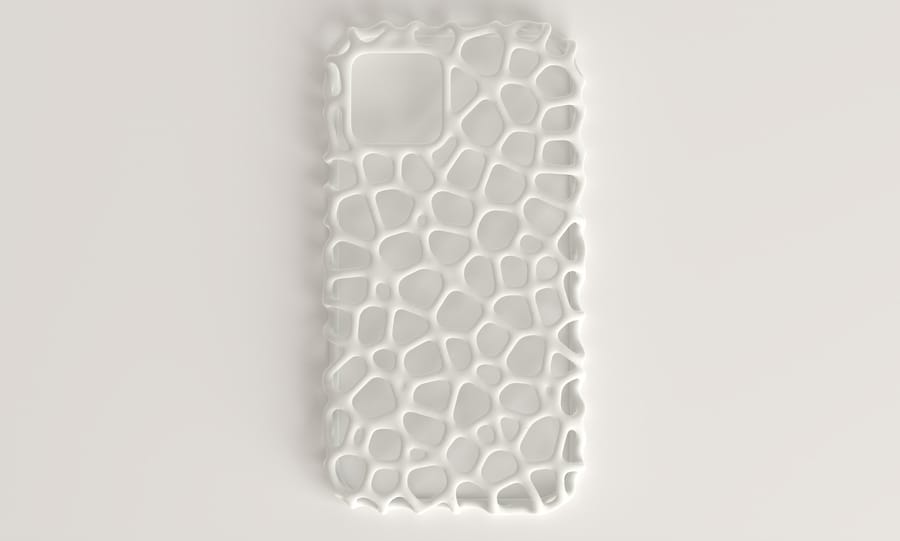
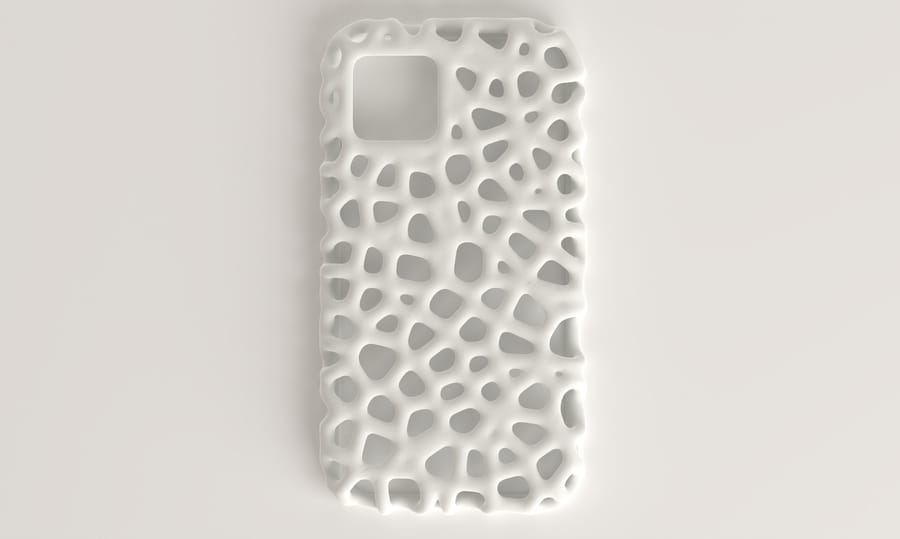
The second application. Customizing a biomimetic (Voronoi) phone case isn’t about swapping patterns — it means adjusting hole size, density, line thickness, corner rounding and flow, while respecting structural constraints such as thickness and the camera and button cutouts. That makes it far more complex than an ordinary case.
Users can simply say “make the holes sparser”, “wrap the edges more” or “lighter, but keep basic protection”; the language model adjusts the matching parameters, and different seeds let users browse many texture layouts. The model can also gather public specs for each phone model, shortening the time spent collecting dimensions.
One texture system, many phone models
Adjusting texture thickness with words
Results: most helpful for people without a design background
Overall differences between the interfaces were not significant, but non-designers gained significantly more from the LLM interface in intuitiveness, satisfaction and motivation to explore. Language interfaces help most the people who were previously locked out by parameters, while designers still prefer the precision of sliders when refining.